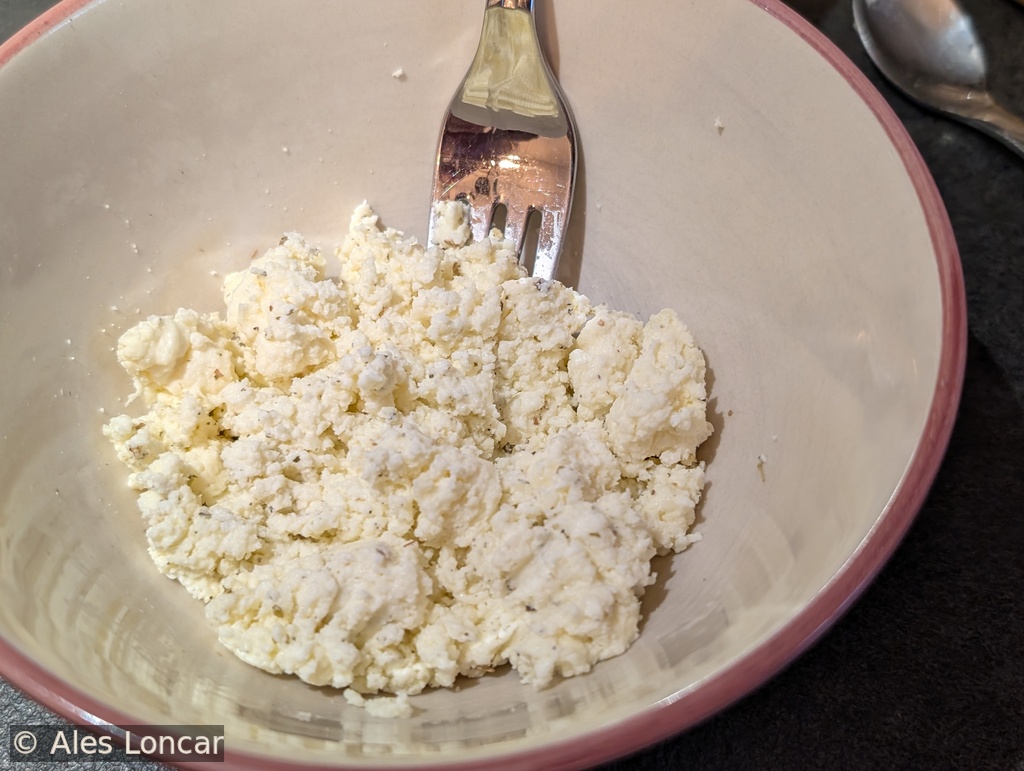
Seasoned with salt and black pepper, mashed with a fork. Ready to eat as is or bake into a fresh focaccia.
Kisilak is a traditional Prekmurje term for plain homemade cottage cheese. With milk, a little acid, gentle heat, and cheesecloth, you can turn raw or slightly soured milk into fresh, soft curds.
Ingredients
- 2 - 3 liters raw whole milk, or slightly soured raw milk
- 2 - 3 tablespoons fresh lemon juice or white vinegar, about 1 tablespoon per liter of milk
- 1 - 2% fine salt by weight, about 5 - 10 g salt per 500 g finished cheese
- optional: freshly ground black pepper to taste
When a half-liter of our local farmer’s raw milk went sour while my youngest son was away on a school trip, my wife wanted to pour it down the drain.
Instead, I ran a quick “proof of concept” to make kisilak, our traditional Prekmurje term for plain, homemade cottage cheese.
Nothing goes to waste in a working kitchen.
Making cottage cheese at home from fresh or slightly soured raw milk is remarkably simple. Gentle heat separates the milk into firm, creamy curds and liquid whey. A quick strain through cheesecloth gives you a soft, fresh cheese that is miles ahead of most store-bought tubs.
Ingredients Link to heading
Standard Batch Link to heading
This recipe scales easily.
- 2–3 liters raw whole milk, or slightly soured raw milk
- 2–3 tablespoons fresh lemon juice or white vinegar, about 1 tablespoon per liter of milk
- 1–2% fine salt by weight, about 5–10 g salt per 500 g finished cheese
- Freshly ground black pepper, optional, to taste
Instructions Link to heading
Step 1: Gentle Heat and Acid Link to heading
Pour the milk into a stainless steel pot.
Heat slowly over medium-low heat until it reaches about 85°C. The milk should be hot to the touch, with small bubbles forming around the edges, but it should not boil.
Stir in the lemon juice or vinegar gently.
You should almost immediately see the milk break into white curds separating from the yellowish liquid whey.
Remove the pot from the heat and let it sit undisturbed for 10–15 minutes, so the curds can fully set.
Step 2: Strain and Drain Link to heading
Line a large strainer or pot with a clean piece of fine cheesecloth.
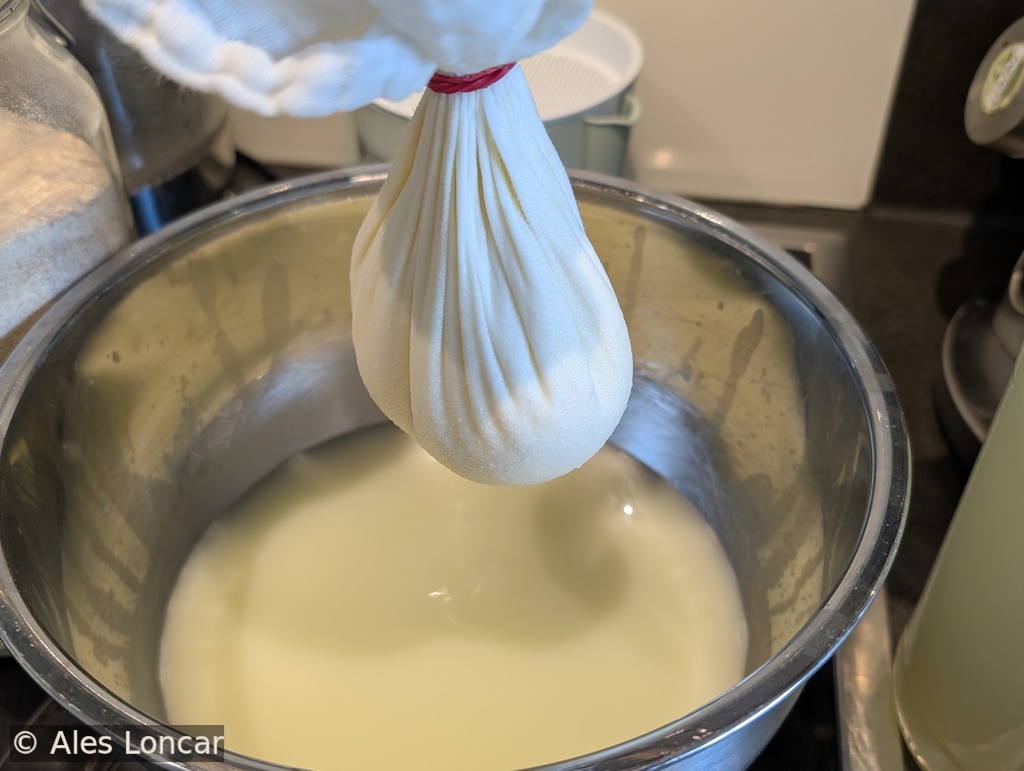
Pour the curd mixture into the cloth and let the liquid whey drain into the pot underneath.
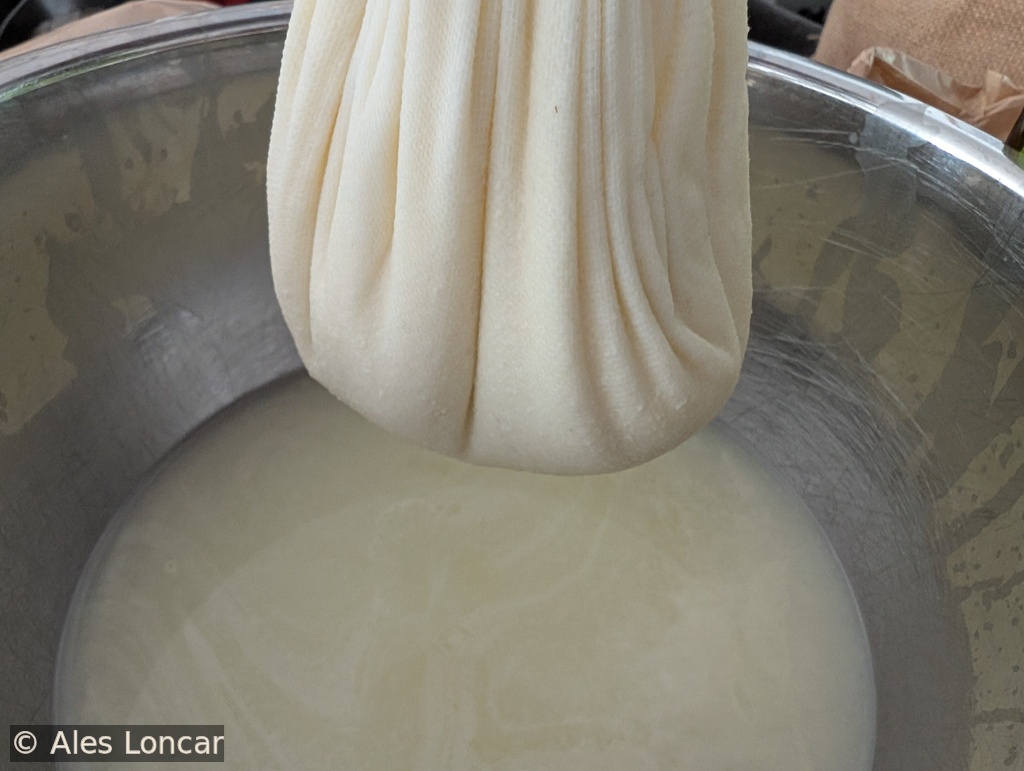
Gather the corners of the cheesecloth, tie them securely, and hang the bundle above a bowl or pot.
A rubber band works well for securing the cloth.
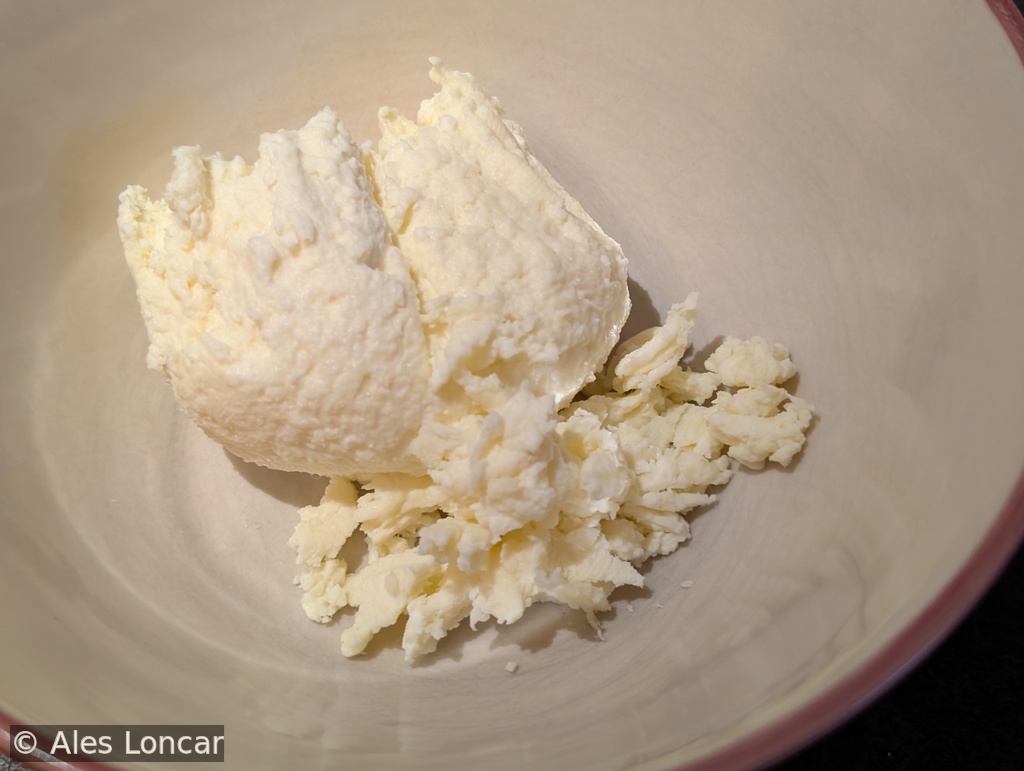
Let it drain for several hours, until the kisilak reaches your desired firmness.
For a softer cheese, drain it for less time. For a firmer cheese, let it hang longer.
🥛 Don’t Pour Out the Whey (“Liquid Gold”) Link to heading
The yellowish liquid left in your pot after straining isn’t waste, it’s nutrient-dense acid whey, loaded with B vitamins, calcium, and protein.
- Storage & Freezing: Kept in a glass jar in the fridge, fresh whey lasts up to 1 week. If you are making a large batch (from 2–3 liters of milk), freeze the extra whey in freezer-safe containers or ice cube trays for up to 6 months. (Tip: Leave 2–3 cm of headspace at the top of jars/containers so they don’t crack as the liquid expands!)
- In Baking (Best Use!): Swap cold whey 1:1 for the water or milk in your dough. The natural lactic acid tenderizes the gluten, yielding an remarkably soft crumb and richer flavor. See our Cast Iron Sourdough Whey Focaccia for a perfect example.
- In Soups & Stews: Use it as part of the liquid base for vegetable soups or beef/lamb stews (like our Lamb Heart Stew for a rich, subtle tang.
- For Pancakes & Crepes: Replace milk in pancake or crepe batter for extra fluffiness.
Step 3: Season and Store Link to heading
Transfer the drained cheese curds into a bowl.
Mix in 1–2% salt by weight and, if you like, a pinch of freshly ground black pepper.
Mash gently with a fork to break up the curds and distribute the seasoning.
Use immediately, or store tightly covered in the refrigerator for up to 5 days.
It makes an incredible topping for focaccia, fresh bread, potatoes, or anything that needs a spoonful of creamy, salty freshness.
Chef’s Tip: Care for Your Cheesecloth Link to heading
Do not throw away or ruin your cheesecloth.
Rinse it immediately in cold water first to wash out the leftover milk proteins. Avoid hot water at this stage, because it can cook the proteins into the fibers.
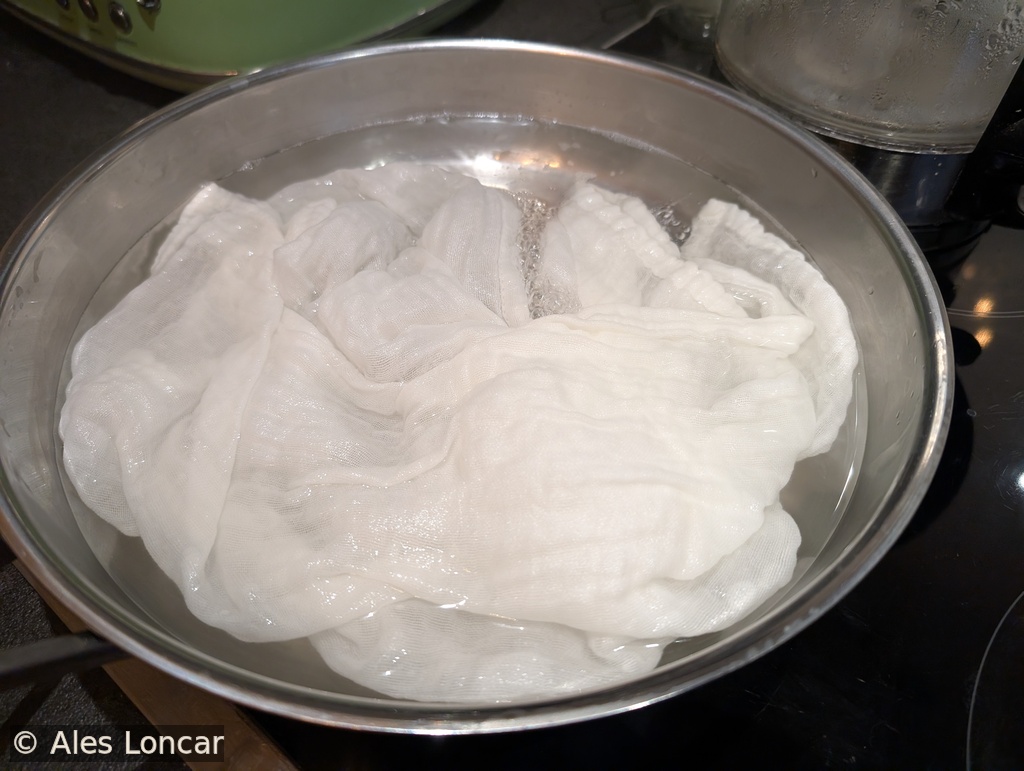
Once rinsed clean, place the cheesecloth in a small pot of water and boil it for 5–10 minutes to sterilize it for your next batch.
Notes Link to heading
Use raw milk only from a trusted source. If you are unsure about the quality or safety of the milk, use pasteurized whole milk instead.
Slightly soured raw milk works especially well for this kind of simple fresh cheese, as long as it smells pleasantly sour and clean, not spoiled or rotten.