This is not a traditional recipe, but a reference post for preparing yeast water and turning it into a starter for later baking.
Ingredients
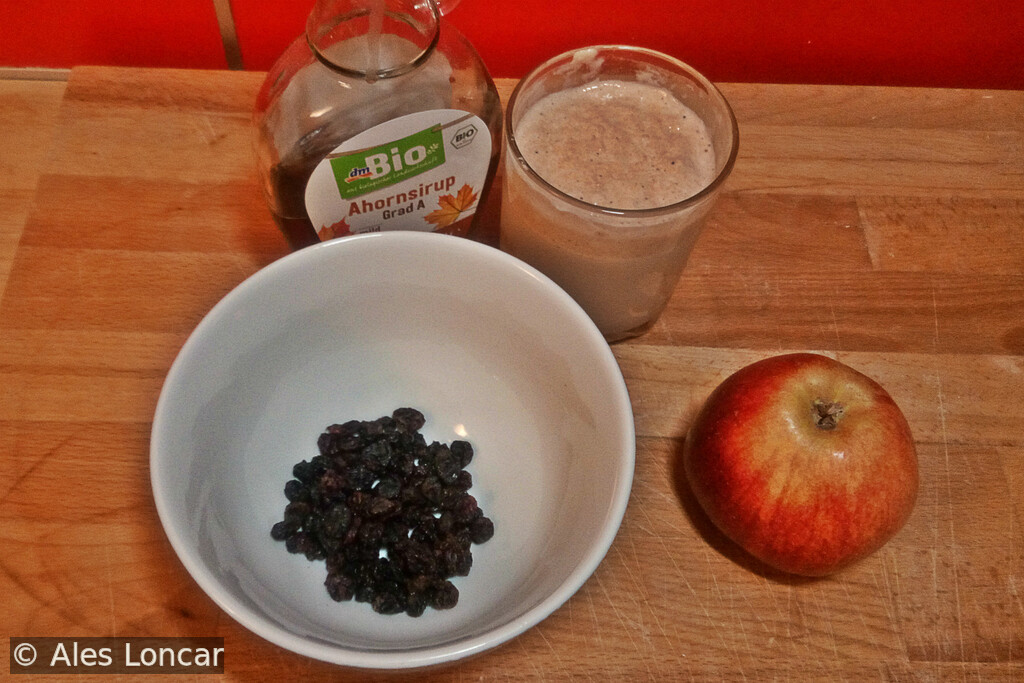
- 1 apple, unpeeled and cut into small pieces
- 1 handful raisins
- 1 tablespoon maple syrup or honey
- 1–2 tablespoons sugar
- water
- 1 large jar or bottle with a tight lid
Instructions Link to heading
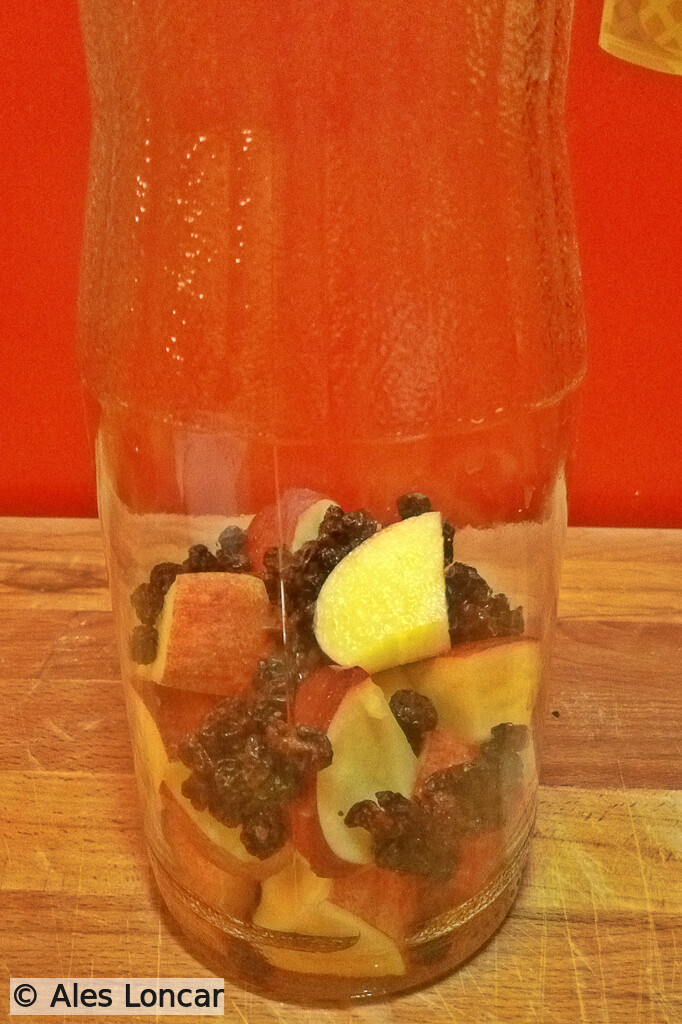
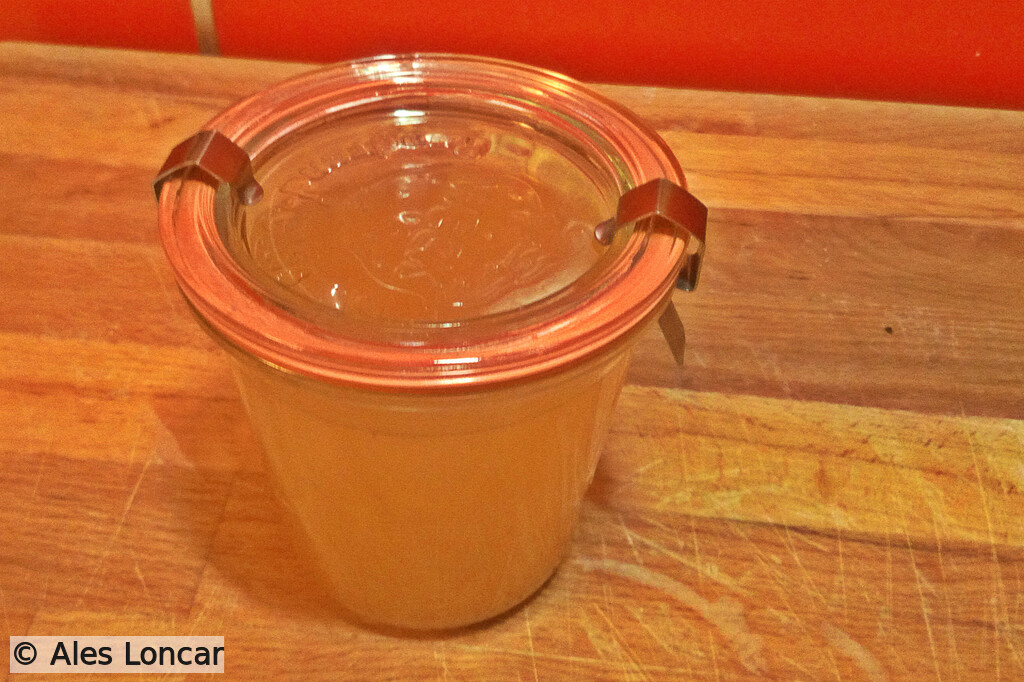
- Place the apple pieces and raisins into a clean jar or bottle.
- Add the maple syrup or honey and the sugar.
- Pour in enough water to cover the fruit, leaving a little space at the top.
- Close the jar and shake it well.
- Place it in a warm, dark spot.
- Every day, shake or swirl the jar 2–3 times and carefully release the gas.
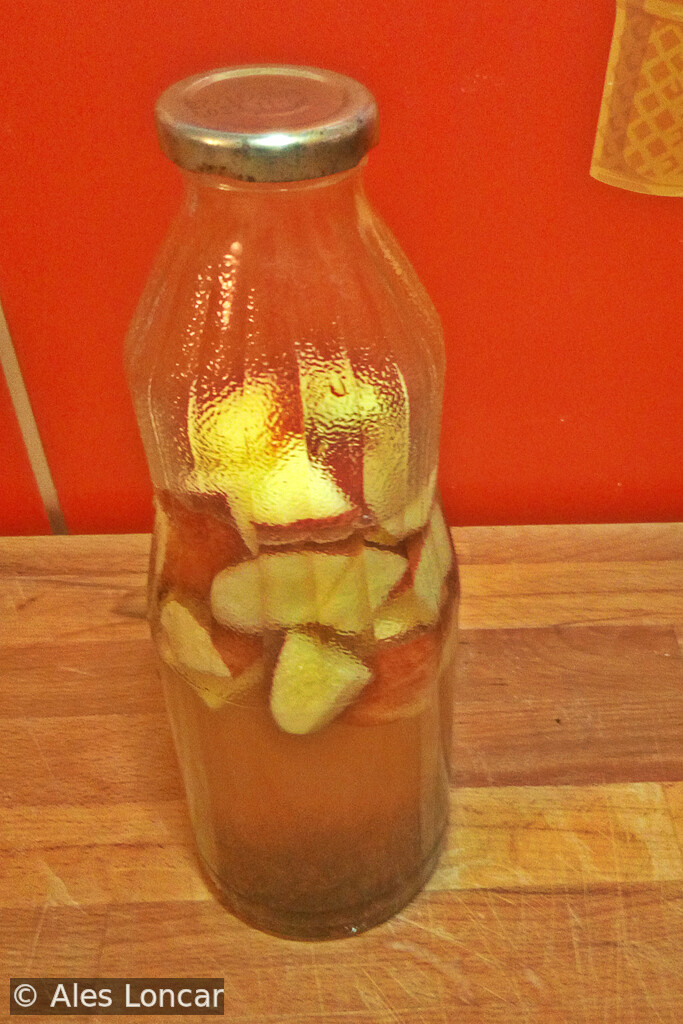
- After a few days, small bubbles should appear around the fruit.
- When the liquid becomes bubbly and slightly foamy on opening, strain out the fruit.
- Store the yeast water in a cool and dark place, preferably in the refrigerator.
- If you do not use it often, feed it once a week with a small amount of honey or sugar.
Starter Build Link to heading
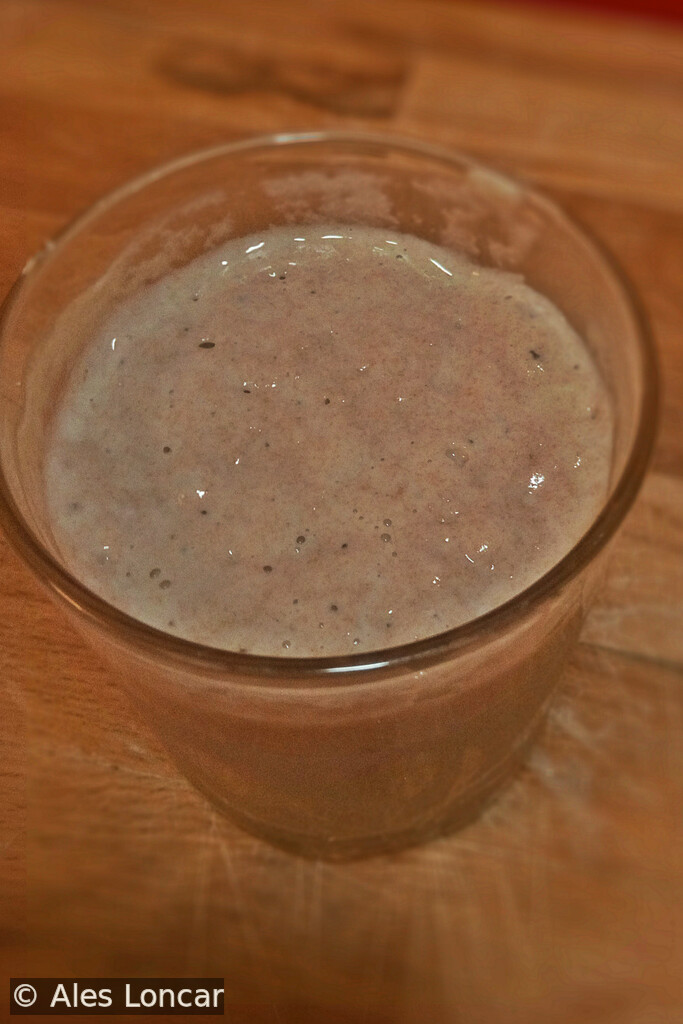
Yeast water is usually not used directly in the dough. First, it is mixed with flour to build a starter.
Example: 120 g starter Link to heading
- Mix 60 g yeast water with 60 g flour.
- For a stronger starter, I usually build it in two steps:
- 30 g yeast water + 30 g flour
- let it double
- add another 30 g yeast water + 30 g flour
- let it double again
This makes the starter more stable and reliable for baking.
Notes Link to heading
Yeast water is one of the ways I bake in my kitchen, alongside industrial yeast and sourdough.
I used apples and raisins to make my yeast water, but you can play around with other fruits or even flowers too. Basically, you just need something that naturally carries wild yeast and bacteria. Wild fruit is a great place to start: blueberries, raspberries, figs, wild grapes, and the like, but store-bought fruit works just fine too, like apples, pears, or dried fruits such as raisins and dates.
Compared to sourdough, doughs made with yeast water usually have a milder flavor and less acidity. That makes it especially useful for breads and pastries where I want a more neutral taste. Yeast water starters can be mixed with different flours, including gluten-free flour. These products will also be enjoyed by anyone who avoids gluten or whose body reacts negatively to it!
You can also use yeast water to make fermented beverages, including alcoholic ones. If you want to use yeast water in home brewing, keep in mind that wild yeast does not survive at higher alcohol concentrations. In general, less sugar is used when using a wild starter than when using commercial yeast.
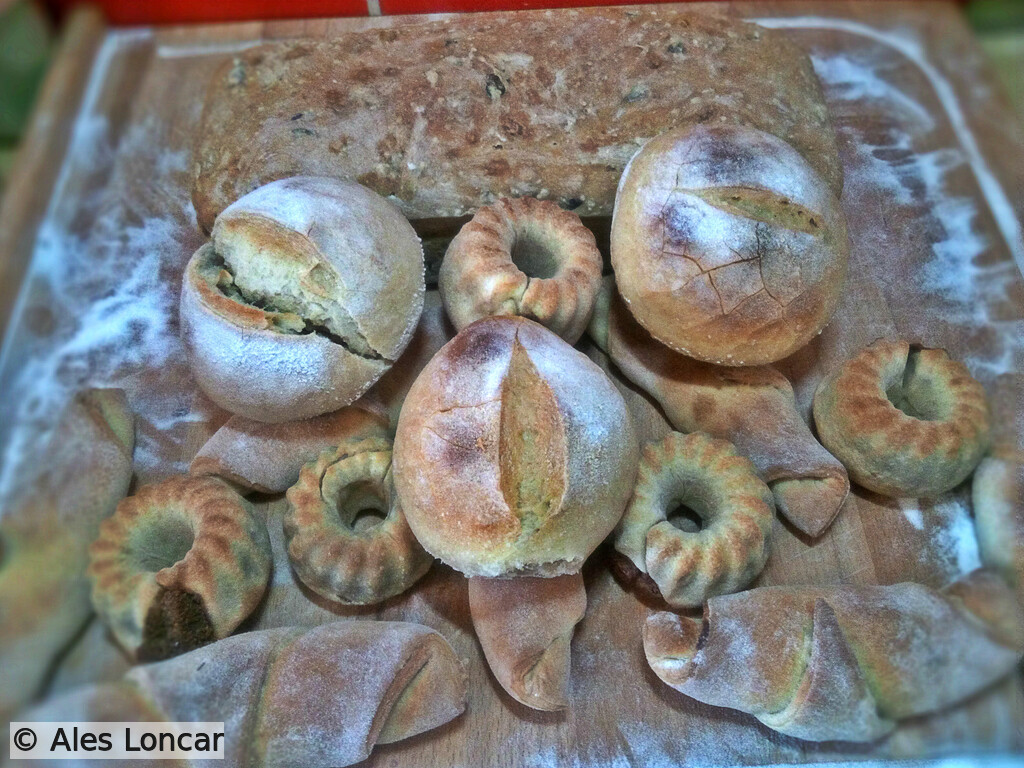
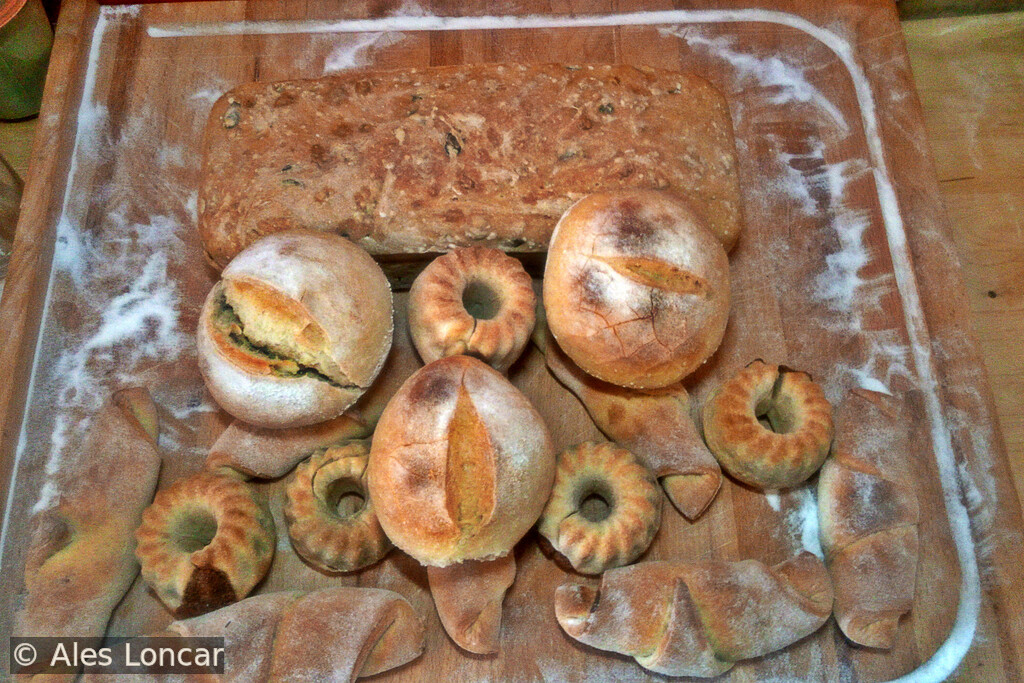
A few baked goods made with a starter from apple yeast water.
In the photo, I used apple yeast water to bake:
- mixed seed loaf with pumpkin, sunflower, and pine nuts
- spelt rolls
- mini pastries filled with dark chocolate and almonds
- chocolate rolls
The bread and rolls proofed at room temperature, while the sweet dough rested in the refrigerator.
Vesela kuharija 😋👌